
Our Lizards
Photo Credit: Carey Knox
Mountain Beech Gecko
Woodworthia "south-western"
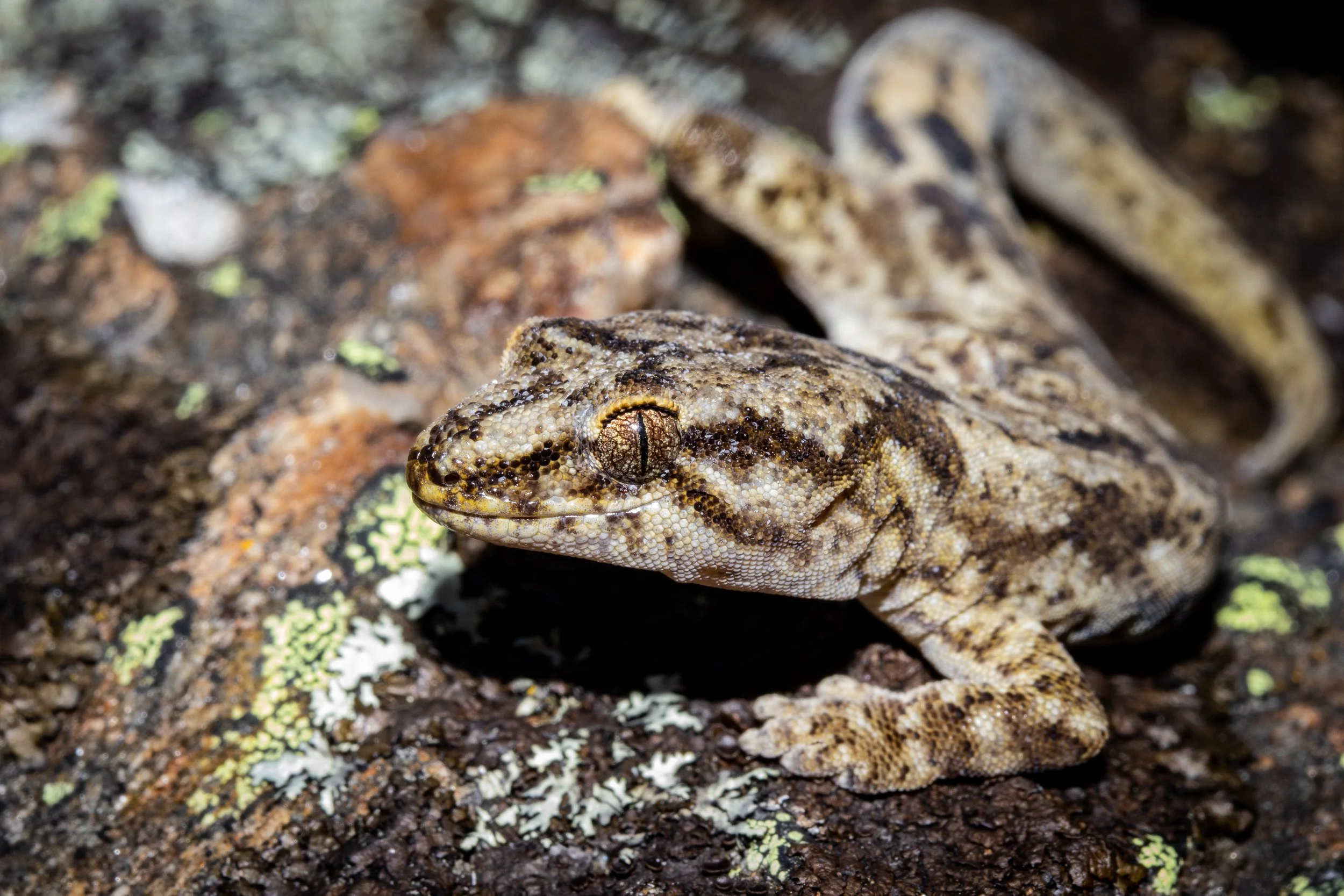
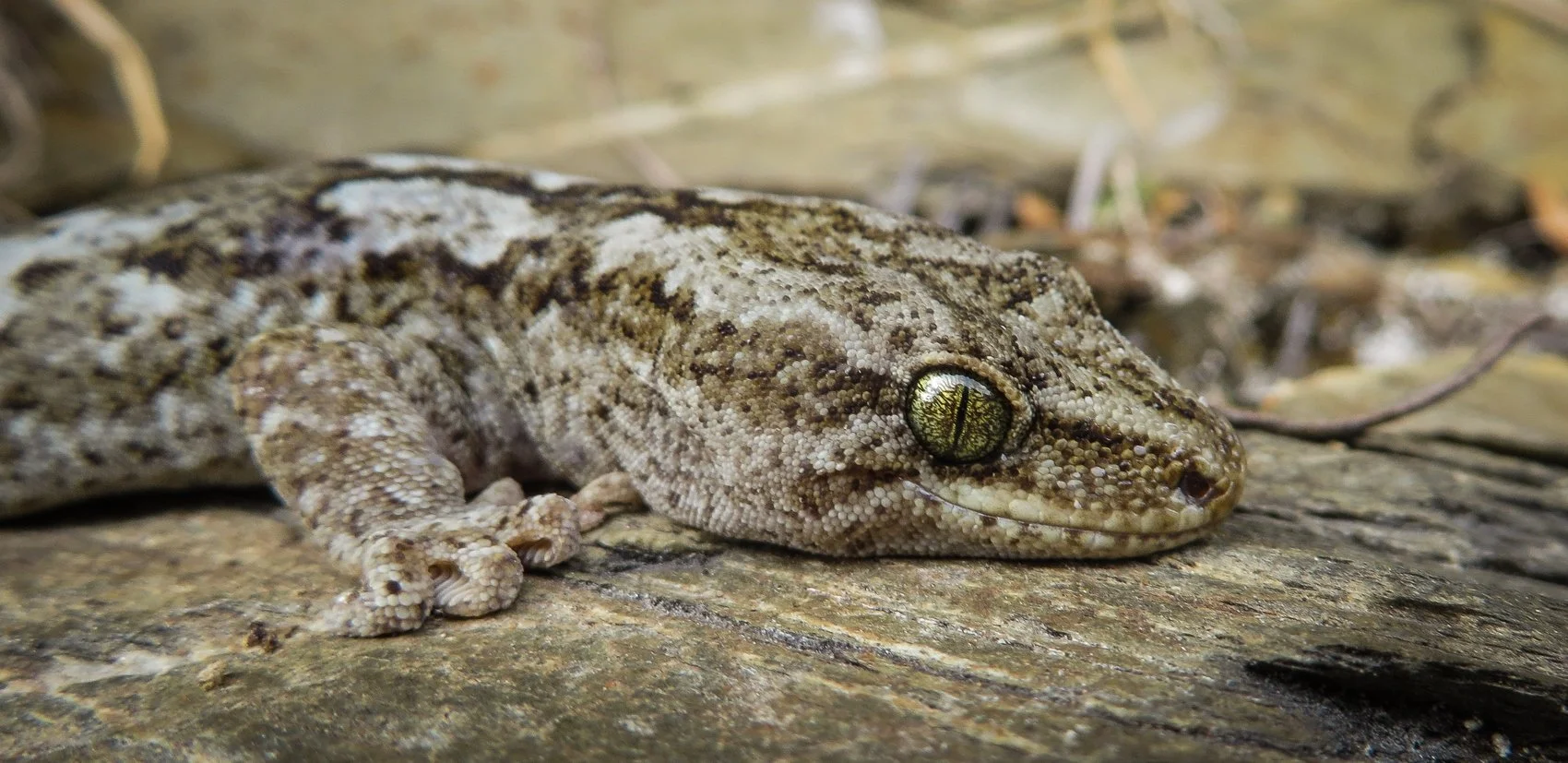
Hidden in the rocky crevace’s within the sanctuary a small number of mountain beech geckos remain. They’re a small, nocturnal gecko that emerges at night to hunt insects along tree trunks and rocky surfaces.
Like many of New Zealand’s geckos, they are long-lived and give birth to live young rather than laying eggs. Their colouring and patterns provide excellent camouflage against bark and lichen, making them difficult to spot.
McCann’s Skink
Oligosoma maccanni
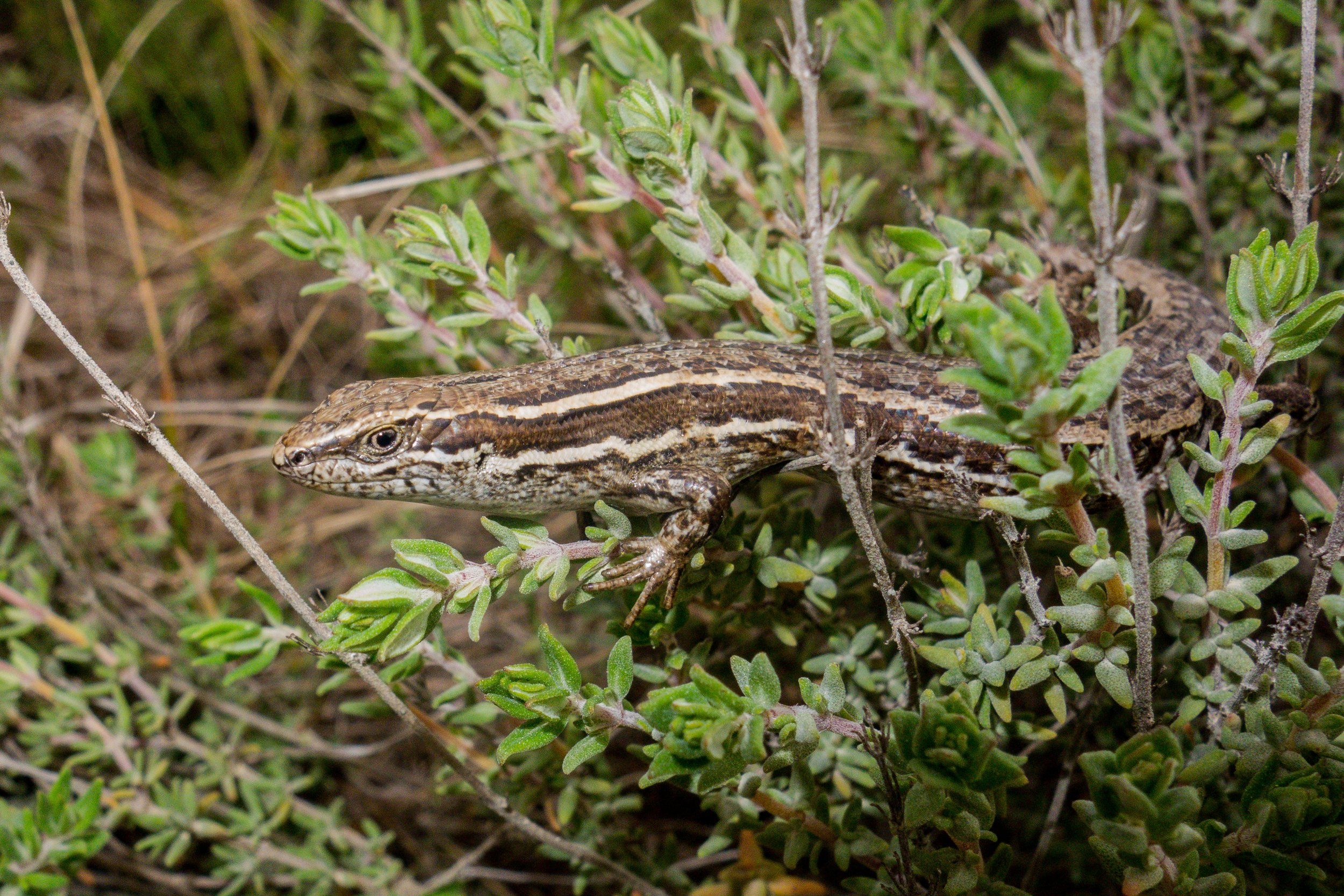
One of the more commonly encountered skinks in Central Otago, McCann’s skink is well adapted to dry, rocky environments. They are active during the day, often seen basking in the sun before darting quickly into cover when disturbed.
Their striped patterning helps them blend into surrounding rocks and grassy vegetation. Being the most common lizard within the sanctuary, they play an important role for monitoring the success of the predator eradication.
Looking Ahead
Expanding the habitat and diversity
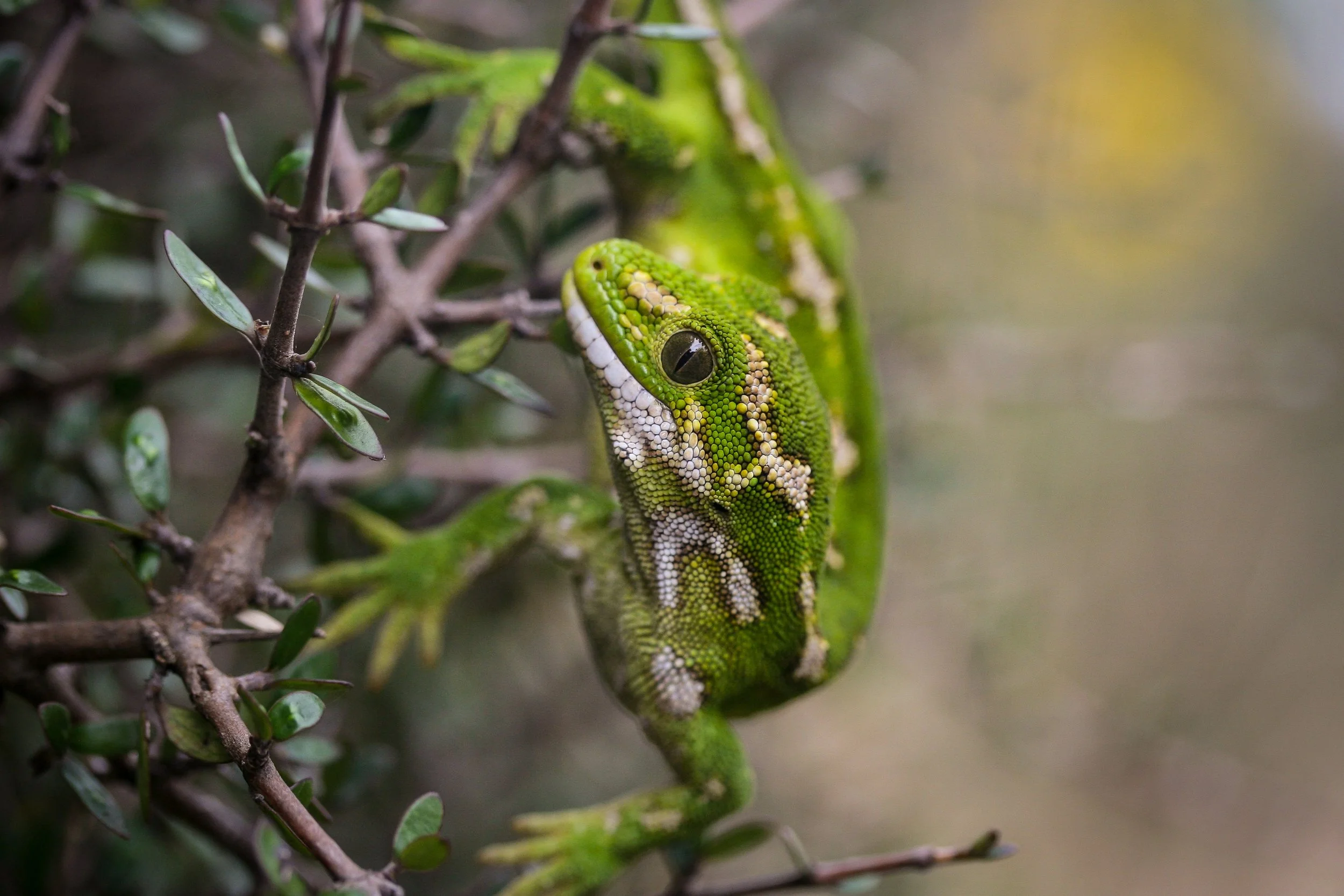
The sanctuary has been designed to support a wide range of dryland lizard species over time. In addition to the species currently present, there is potential to reintroduce locally appropriate species where suitable habitat exists and long-term protection can be maintained.
Species such as tussock skinks and cryptic skinks have been identified as strong candidates for future translocation. The site includes a mosaic of dry grassland, shrubland, rocky outcrops, and wetter margins, providing a range of ecological niches that can support different lizard species with varying habitat requirements.
Looking further ahead, there is potential to restore species that were historically present in the wider Whakatipu Basin. This includes species such as lakes skink, which currently lack secure populations within protected sanctuary environments.
Any future translocations would be carefully planned and undertaken in accordance with ecological best practice and relevant approvals, with the aim of establishing resilient, self-sustaining populations over the long term.
Photo Credit: Carey Knox